
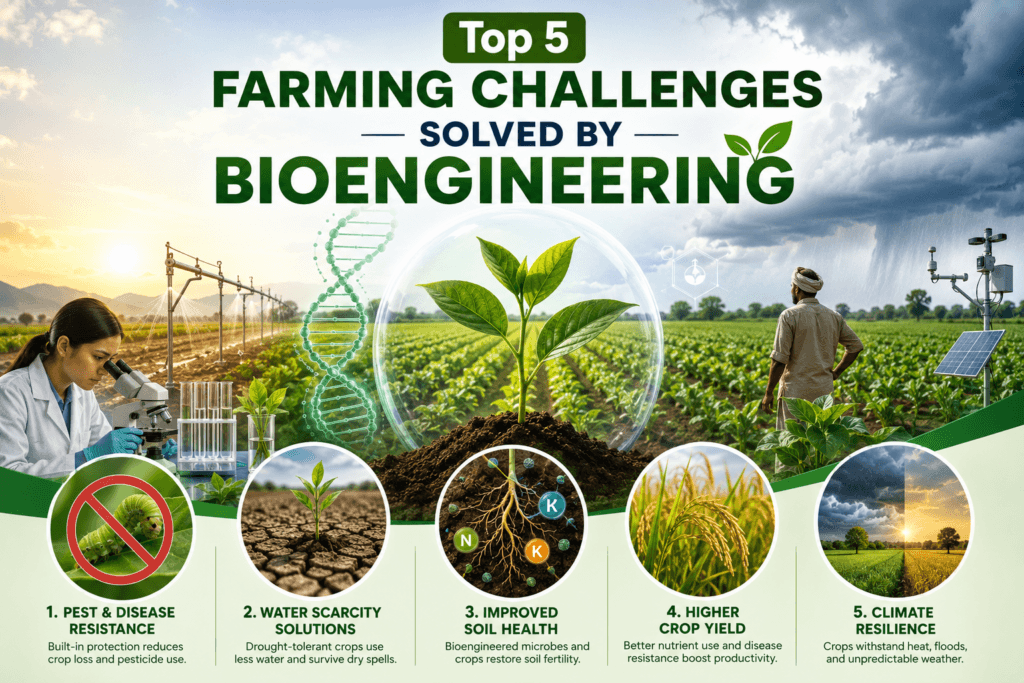
Pest damage, water shortage, weak soil, low yield, and sudden weather shifts sit at the center of the farming challenges solved by bioengineering. Plant science now builds crops that hold up under harsh conditions and give more food from the same patch of land. This piece walks through the five biggest wins and how each one actually shows up in a farmer’s field.
What Are the Top Farming Challenges Solved by Bioengineering?
Pest attacks, water shortage, tired soil, low yield, and weather that refuses to stay predictable make up the core farming challenges solved by bioengineering. Farmers across India deal with at least one of these almost every season, sometimes all five together.
A quick rundown of the five problems:
- Pests and diseases wipe out crops before harvest
- Water scarcity across dry and semi-arid belts
- Soil loses fertility after years of nonstop farming
- Yield staying flat even as input costs climb
- Weather patterns are throwing off the sowing and harvest timing
Laying these out makes it obvious why farming challenges solved by bioengineering have moved from lab research into everyday agricultural planning.
How Does Bioengineering Solve Pest and Disease Problems in Farming?
Plants get built with resistance already inside them, so they can push back against insects and infections without leaning entirely on chemical sprays. Both crop loss and pesticide bills drop as a result.
Researchers insert specific genes that give crops a natural defense against common pests. Cotton grown in several Indian states show this well, with pest-resistant strains outlasting older varieties by a wide margin.
Out of all the farming challenges solved by bioengineering, pest resistance tends to show results the fastest, often within a single season.
Can Bioengineering Help Farming Challenges Related to Water Scarcity?
Crops engineered to survive on far less water, a key piece of the farming challenges solved by bioengineering, change outcomes in regions where rain cannot be counted on year after year. Rajasthan and parts of Maharashtra feel this pressure the most.
These drought-tolerant varieties are built to:
- Hold onto water more efficiently at the cellular level
- Push roots deeper toward underground moisture
- Get through long dry stretches without wilting
- Keep yield steady even in a weak-rainfall year
For farmers working dry land, this sits among the more important farming challenges solved by bioengineering, since water access alone can decide whether the season pays off.
How Does Bioengineering Improve Soil Health Challenges in Farming?
Microbes and crop varieties are introduced that put nutrients back into the ground instead of pulling more out. Decades of heavy fertilizer use leave land worn out, and output drops no matter how well everything else is managed.
Nitrogen-fixing bacteria return to the soil through these bioengineered approaches, cutting how much synthetic fertilizer a field needs. Fertility comes back gradually over a few seasons, keeping the land workable for whoever farms it next. This slower fix belongs on any list of farming challenges solved by bioengineering, even if it takes longer to notice than a pest-resistant crop does.
Does Bioengineering Solve Low Crop Yield Challenges in Farming?
Seeds built to grow faster, fight disease, and pull nutrients more efficiently address one of the most stubborn farming challenges solved by bioengineering: low output without adding a single extra acre. More grain from the same field turns straight into better income at the end of the season.
| Traditional Farming | Bioengineered Farming |
| Weak pest resistance | Pest resistance built in |
| Heavy water dependency | Drought-tolerant crops |
| Soil fertility drops over time | Soil-friendly crop varieties |
| Yield swings unpredictably | Yield stays more consistent |
This table sums up why farming challenges solved by bioengineering keep coming up whenever researchers and policymakers talk about the future of agriculture.
How Is Bioengineering Solving Climate-Related Farming Challenges?
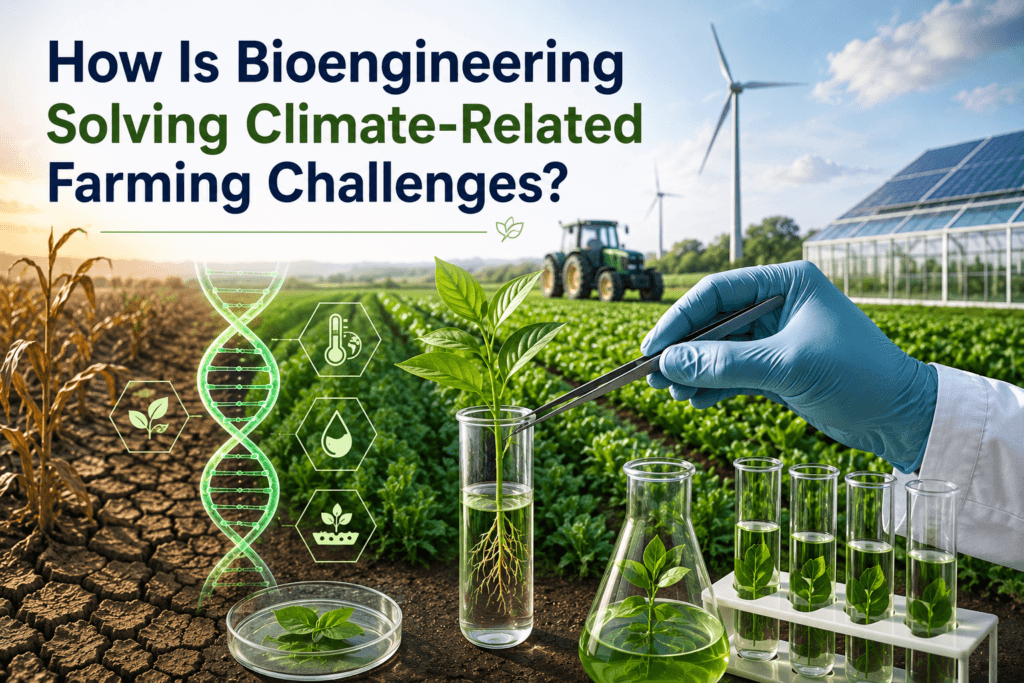
Crops are now designed to handle heat spikes, unseasonal rain, and shifting growing windows without a sharp drop in output. Older varieties often buckle once the weather turns erratic.
Climate-resilient seeds give farmers room to shift sowing and harvest dates instead of losing a whole season to one bad monsoon. This branch of farming challenges solved by bioengineering is likely to expand faster than any of the others in the years ahead.
Where Can Farmers Access Support for Bioengineering Solutions?
Agricultural research institutes, certified seed suppliers, and land management platforms are the usual first stops for guidance.
While bioengineered crops can help improve productivity and resilience, their success also depends on factors such as proper land preparation and modern farming methods. This is where platforms like Land Levellers play an important role. By working closely with farming communities and supporting better land preparation practices, they help create the right conditions for farmers to get the best results from advanced crop technologies. Together, these approaches can help farmers address several agricultural challenges more effectively.
Frequently Asked Questions
What are the main farming challenges solved by bioengineering?
Pest attacks, water scarcity, poor soil health, low yield, and climate stress form the core farming challenges solved by bioengineering.
Is bioengineering safe for crops and soil?
Yes, properly regulated bioengineered crops go through strict testing before reaching farmers and are considered safe for both soil and consumption.
Does bioengineering reduce farming costs?
Yes, it cuts spending on pesticides, water, and fertilizers, which lowers overall input costs over time.
Which crops benefit most from bioengineering in India?
Cotton and several drought-resistant grain varieties show the strongest gains from bioengineering in Indian farming.
Can small farmers adopt bioengineered crops easily?
Yes, with proper guidance and access to certified seeds, small farmers can adopt these crops without a major extra investment.
For more updates on bioengineering, modern farming solutions, and agricultural innovations, follow us on Facebook and stay connected with the latest industry insights.
