
Highlights
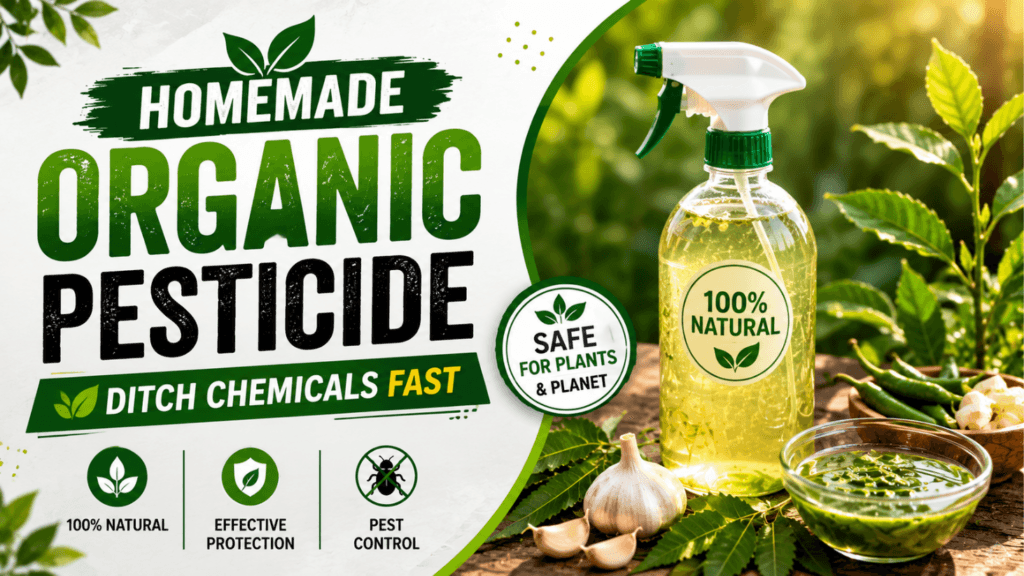
-Make homemade organic pesticide using neem leaves, garlic, and cow urine — no need to buy expensive chemicals
-Recipes backed by agricultural university research (TNAU) and ICAR guidelines
– Safe for your crops, your soil, and your family’s health
Homemade Organic Pesticide: A Complete Guide
Homemade organic pesticide is one of the smartest ways to protect your crops without spending a rupee on chemicals. If you’ve ever stood in your field looking at leaves being eaten away by pests, you know the frustration. Your first instinct might be to rush to the nearest shop and grab a bottle of chemical spray. But here’s the thing — there’s a smarter, cheaper, and safer way. Learning how to make homemade organic pesticide can save you money, protect your soil’s long-term health, and keep harmful chemicals off the food your family eats.
In this guide, I’ll walk you through simple, tested methods that farmers across India have used for generations — methods that are now backed by research from agricultural universities and organizations like ICAR. No complicated equipment, no expensive ingredients. Just things you probably already have around your farm or kitchen.
Why Choose Homemade Organic Pesticide Over Chemical Sprays?
Before we get into the “how,” let’s talk about the “why.” Chemical pesticides work fast, sure — but they come with a cost. Over time, they damage soil microorganisms, kill beneficial insects like bees and ladybugs, and leave residues on your produce. Repeated use also makes pests build resistance, meaning you need stronger doses every season just to get the same result.
A homemade organic pesticide, on the other hand, works with nature instead of against it. It targets harmful pests while leaving the good ones mostly untouched. It’s biodegradable, doesn’t poison your water table, and — most importantly for small farmers — it costs almost nothing to prepare.
Ingredients You’ll Need
The good news? You don’t need to shop for anything fancy. Most of these ingredients are things you already have on hand:
- Neem leaves (or neem oil)
- Garlic cloves
- Cow urine (gomutra)
- Green chilies
- A basic soap (as a natural surfactant)
- A large container or drum
- Water
- A cloth for straining
Method 1: Neem-Based Homemade Organic Pesticide
Neem is often called nature’s own pesticide, and for good reason. It contains a compound called azadirachtin, which disrupts the feeding and reproduction of soft-bodied pests like aphids, mealybugs, mites, whiteflies, and thrips — without harming beneficial insects in the process.
How to prepare it:
- Crush around 5 kg of fresh neem leaves into a fine paste.
- Mix this paste into 5 liters of water (or cow urine, for an extra boost).
- Let the mixture sit and ferment in a shaded spot for a few days, stirring occasionally.
- Strain the mixture through a clean cloth to remove solid particles.
- Dilute the strained liquid with water before spraying — usually one part solution to several parts water works well.
This spray is particularly effective as a first line of defense. Many organic farmers follow it up by releasing beneficial insects like green lacewings to keep pest populations under control long-term.
Method 2: Cow Urine and Garlic Pesticide
This one might sound unusual if you’re new to organic farming, but it’s been used successfully across Indian villages for years. Cow urine contains nitrogen and other compounds that not only repel pests but also act as a mild growth booster for your crops.
How to prepare it:
- Take about 10 liters of cow urine and mix in 500 grams of crushed garlic.
- Add roughly 50 ml of kerosene to the mixture.
- Let it rest for 24 hours in a covered container.
- After 24 hours, mix in 100 grams of soap (this helps the spray stick to leaves) and strain thoroughly through a cloth.
- Dilute one liter of this concentrate with around 80 liters of water before spraying on your crops.
This solution is especially effective against sap-sucking insects, and many farmers report it also helps keep away larger pests and stray animals from damaging standing crops.
Method 3: Multi-Herb Fermented Homemade Organic Pesticide
For a more comprehensive, broad-spectrum solution, agricultural researchers recommend a fermented mixture using multiple plant leaves along with cow dung and cow urine. This method takes a bit longer but produces a homemade organic pesticide that can be stored and used across an entire season.
How to prepare it:
- In a large drum, combine crushed leaves from neem, custard apple, karanja, and a few other locally available plants (roughly 2 kg each), along with green chili paste and crushed garlic.
- Add 3 kg of cow dung and 5 liters of cow urine, then top up with about 200 liters of water.
- Cover the drum with a cloth or gunny bag and keep it in the shade.
- Stir the mixture three times a day for about a month to allow proper fermentation.
- Once fermented, filter the liquid — it’s now ready to use and can be stored for up to six months.
This concentrated mix is typically enough to treat around one acre of farmland and works against a wide range of pests and early-stage crop diseases.
Tips for Best Results
- Always spray in the early morning or late evening — never in direct harsh sunlight, as it can reduce the effectiveness of the spray and stress the plants.
- Test any new mixture on a small patch of your field first before applying it everywhere.
- Store your homemade organic pesticide in a cool, shaded place, away from direct sunlight.
- Reapply every 7–10 days for consistent pest control, especially during high-infestation seasons.
- Combine methods — using neem spray alongside beneficial insects gives you better, longer-lasting protection.
Is Homemade Organic Pesticide as Effective as Chemical Pesticide?
This is probably the question on your mind right now. The honest answer: organic pesticides generally act a little slower than chemical ones, since they work through natural deterrence rather than instant toxicity. However, they build long-term resilience in your soil and crops, reduce your input costs season after season, and open doors to premium markets — organic produce commands significantly better prices these days as more buyers look for chemical-free food.
Final Thoughts
Switching to homemade organic pesticide isn’t just a trend — it’s a return to farming methods that worked for generations before chemical alternatives took over. It takes a little patience to prepare these mixtures, but the payoff is healthier crops, healthier soil, and a healthier you. Once you get into the rhythm of preparing and applying these sprays, you’ll wonder why you didn’t start sooner.
Frequently Asked Questions (FAQs)
Q1: How long does homemade organic pesticide last once prepared?
Most neem or garlic-based sprays should be used within a few days of preparation for best results. Fermented multi-herb mixtures, however, can be stored for up to six months if kept properly sealed and away from sunlight.
Q2: Can homemade organic pesticide be used on all types of crops?
Yes, most of these solutions are safe for a wide range of crops including vegetables, grains, cotton, and fruit trees. Always do a small patch test first if you’re trying it on a new crop for the first time.
Q3: Does homemade organic pesticide harm beneficial insects like bees?
Generally, no. Unlike chemical pesticides, organic sprays like neem oil are designed to target specific pests while causing minimal harm to pollinators and beneficial insects when used correctly.
Q4: How often should I spray homemade organic pesticide on my crops?
Every 7 to 10 days is a good rule of thumb, though this can vary depending on the severity of the pest infestation and the specific crop you’re treating.
Q5: Is it costly to prepare homemade organic pesticide?
Not at all. Most ingredients like neem leaves, garlic, and cow urine are either free or very cheap to source, making this one of the most budget-friendly pest control methods available to farmers.
